Q4 is the season your reporting is least trustworthy and most consequential. More spend moves, faster decisions get made, and the numbers you make them on are distorted in two separate ways at once. Most teams catch neither. A few catch one. The report that catches both is the difference between a profitable holiday and a post-mortem in January.
This is a piece about the two lies every holiday report tells, why they compound, and what it takes to read past them, whether you are running one brand or twenty client accounts.
The first lie: the number is not finished
When you pull a week's numbers, the clicks from that week have not all converted yet. Buyers take days, sometimes weeks, to come back and purchase after the click that first found them. So the sales figure is understated and the cost-per-new-customer is overstated, because the conversions that will eventually justify the spend have not landed.
We covered this in depth recently. The number on your dashboard today is not the final number, and treating the mid-week snapshot as if it were finished is how a winning channel gets cut ten days before it would have paid off.
In Q4 this lie gets louder. Conversion windows stretch as shoppers comparison-hunt across a long holiday runway, so the gap between what a fresh report shows and what actually happened is wider than in an ordinary week. The faster you are forced to decide, the more incomplete the number you decide on.
The second lie: the calendar moved your channels, not your campaigns
The holiday itself distorts the report a second way, and this one is easy to mistake for performance.
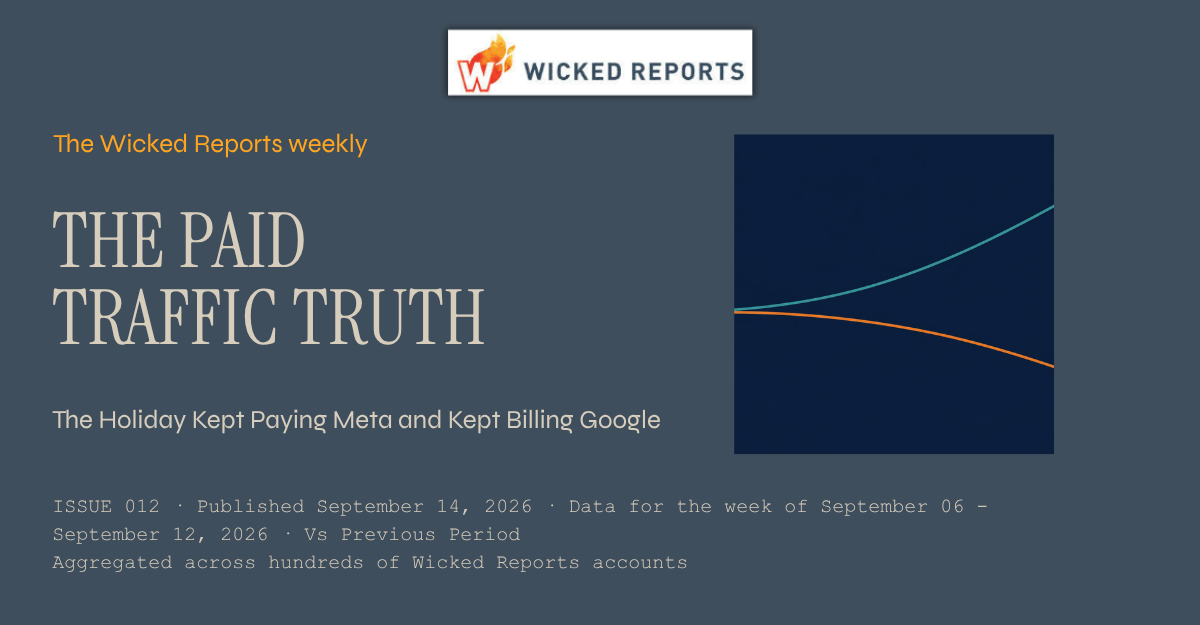
A holiday puts people in browse mode. Feeds fill with deal creative, shoppers buy things they were not searching for, and discovery channels get cheaper and convert better. Meanwhile the buyer who would have typed your brand into a search box gets intercepted upstream by that feed ad, so search traffic skews toward comparison shoppers and its cost per new customer climbs. This is not one platform outperforming another. It is demand changing shape, and it moves your two biggest channels in opposite directions on the same calendar event.
We have now watched this play out two weeks running in The Paid Traffic Truth, our verified benchmark across hundreds of ecommerce accounts. Discovery got cheaper, search got more expensive, for the same holiday, twice. If a report showed one channel looking brilliant and another looking broken over those weeks, neither was true. The calendar did both.
Why the two lies compound
Each lie is a problem on its own. Together they are worse than the sum, because they point in reinforcing directions and hide inside the same report.
Picture a search channel during a holiday week. Lie one understates its finished sales, because its conversions are still landing. Lie two inflates its apparent cost, because holiday demand drained it of the ready-to-buy traffic it usually closes. Read the fresh report and that channel looks expensive and weak at the same time, for two unrelated reasons, neither of which is the channel's actual performance. Cut it, and you may have cut a channel that was fine on both counts once the week finished and the calendar normalized.
Now do that across twelve client accounts on a Monday morning in late November, at holiday spend levels, under time pressure. That is how bad calls get made at scale, in the season they cost the most.
What it takes to read past both
You do not fix this with a faster spreadsheet. You fix it with a report that is already reconciled, already lag-aware, and honest about new versus repeat. That is what the Attribution Report in Wicked Reports is built to do, and it maps cleanly onto both lies.
For the unfinished-number lie: every metric shows where it lands. Alongside each live figure, the report shows a Predicted Future value: where that number is heading once your typical conversion lag resolves. Sales that read low mid-week show their projected finish. An nCAC that reads high today shows where it settles as recent clicks convert. You report the finished number, or the live one with the finished one beside it, instead of a snapshot mistaken for a final score.
For the calendar lie: new versus repeat, verified, first click and last click side by side. Every channel is attributed against first-party order data, not each platform's self-reported claim, so the holiday distortion in single-touch reporting has nowhere to hide. You see which channels opened the sale and which merely closed it, so you do not reward the search box for work the feed did. And because nCAC and New Customer percentage sit on the report as their own metrics, you can tell whether a channel's cost reflects genuinely new customers or repeat business, even in a week when the mix shifted under you.
For the agency doing this twenty times over: the reconciliation that eats your Monday is already done. One view per client, verified, lag-aware, ready before you open it. The hours you would have spent pulling and reconciling and second-guessing become hours spent on the actual call, which is the only thing the client is paying you for.
The Q4 move: measure, signal, act
The through line of everything Wicked Reports does is a simple spine. Measure what actually happened, verified at the order level. Read the signal correctly, past the lag and past the calendar. Then act. Skip the first two and you are acting on a number that lied to you twice.
So the move for this season is not more reporting. It is trustworthy reporting. Tag your holiday weeks as holiday-affected and benchmark them against past holiday windows, not ordinary ones. Read the finished number, not the fresh one. Read new-customer cost, not blended cost. Read first and last click together, not the closer alone. Do that for every account, and the report stops being the thing that misleads you in your most expensive season and starts being the thing that protects the budget.
The teams that win Q4 are not the ones with the most reports. They are the ones whose reports tell the truth on the first read, so the decision after the report is the only hard part left.
Plans start at $499/month, and the 3x guarantee means Wicked Reports pays for itself in logged, dollar-valued decisions within 90 days or it is free.
To watch the holiday channel split play out in verified data, read this week's Paid Traffic Truth.