

Expectation
Define Success Before
You Spend:
You Spend:
The Right Window + The
Right Decision Zones.
Right Decision Zones.
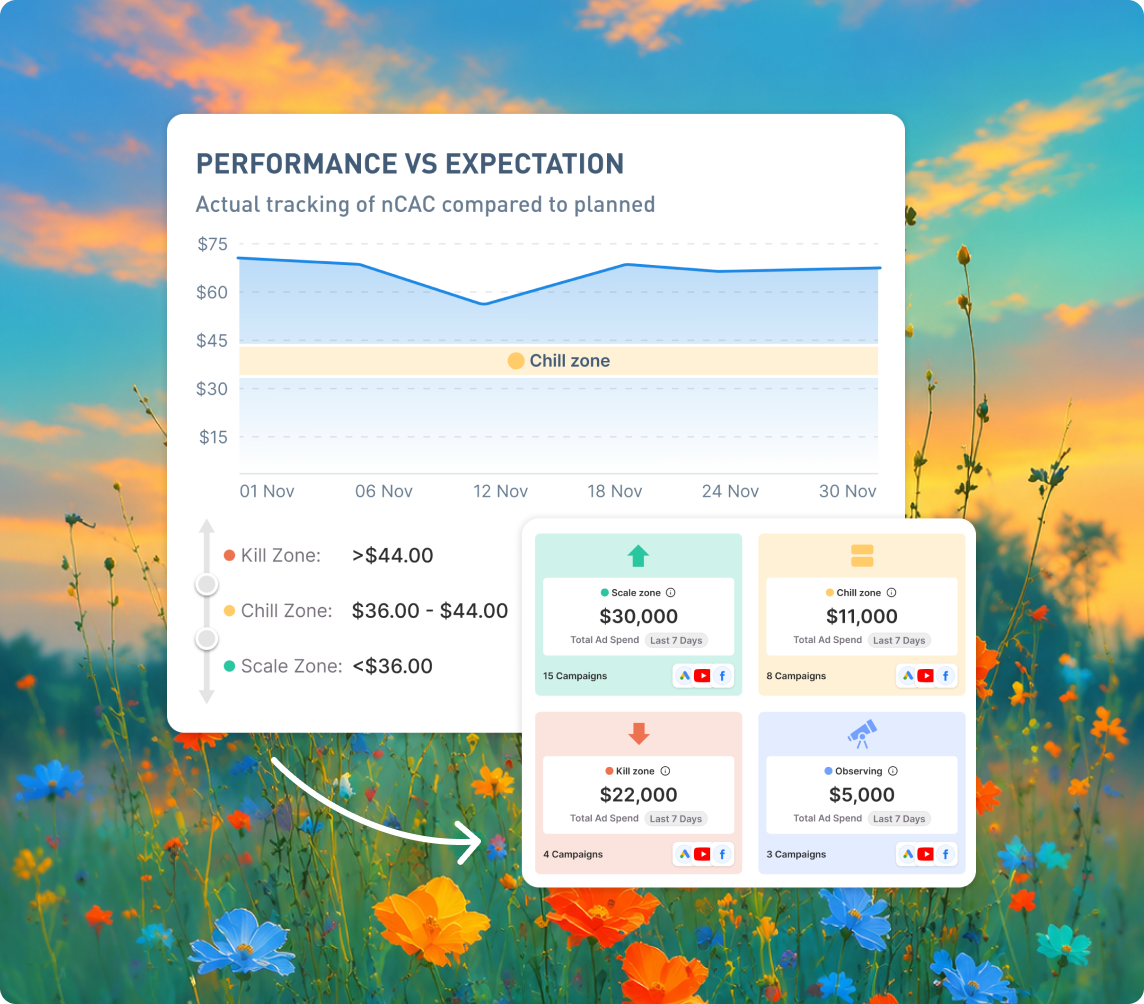
Expectation prevents false failures. It sets the correct attribution lookback window based on Intention — and defines Scale / Chill / Kill zones so your team can act without debating.
{ Attribution Window Pitfalls }
When You Use the Wrong Window,
You Kill New Customer Growth
You Kill New Customer Growth
New customer acquisition often converts slower than retargeting
If you judge NCA or TOF campaigns through a 7-day lens, you create false negatives — then you cut the spend that was building future customers.
At the same time, when there are no clear decision thresholds, teams argue endlessly:
— "Should we increase budget?"
— "Is this working?"
— "How long do we wait?"
— "Is this working?"
— "How long do we wait?"
"Without a time window and decision boundaries, your data has no context."
{ Performance Optimization Zones }
Expectation =
The Correct Attribution Window +
Scale / Chill / Kill Zones
The Correct Attribution Window +
Scale / Chill / Kill Zones

Set the Correct Attribution Lookback Window (Based on Intention)
Recommended windows:
New Customer Acquisition - 30 days
Top of Funnel Cold Traffic - 30 days
Retargeting / Bottom of Funnel - 7 day
Why this matters:
TOF and NCA performance shows up later. BOF shows up fast. Using the wrong window guarantees the wrong decision.
Define Your Scale / Chill / Kill Zones (Based on the North Star KPI)
How zones work:

Chill Zone: acceptable band for the KPI

Scale Zone: better than chill (increase budget)

Kill Zone: worse than chill (diagnose; fix or stop)
Example (If Chill Zone for nCAC is $40–$50):
Scale Zone: nCAC below $40
Chill Zone: nCAC $40–$50
Kill Zone: nCAC above $50 (diagnose or stop)
"If your KPI doesn't match the job, your reporting becomes a trap."
{ Continuous Optimization Loop}
The Expectation
Alignment Loop
Alignment Loop
Expectation isn't guessing — it's the structure that keeps measurement honest.

Expectation

Window

KPI

Zones

Decision

Outcome
{ Business Intelligence Confidence }
When Expectation Matches
Reality, Confidence Returns
Reality, Confidence Returns
"Wicked is bigger than just attribution — it's a business intelligence tool. We walk into exec presentations knowing the five to ten metrics most teams can't answer."
Denis Melnik
Head of Paid Media, OneCore Media

{ Impact of Expectations }
Why Expectation
Changes Everything
Changes Everything

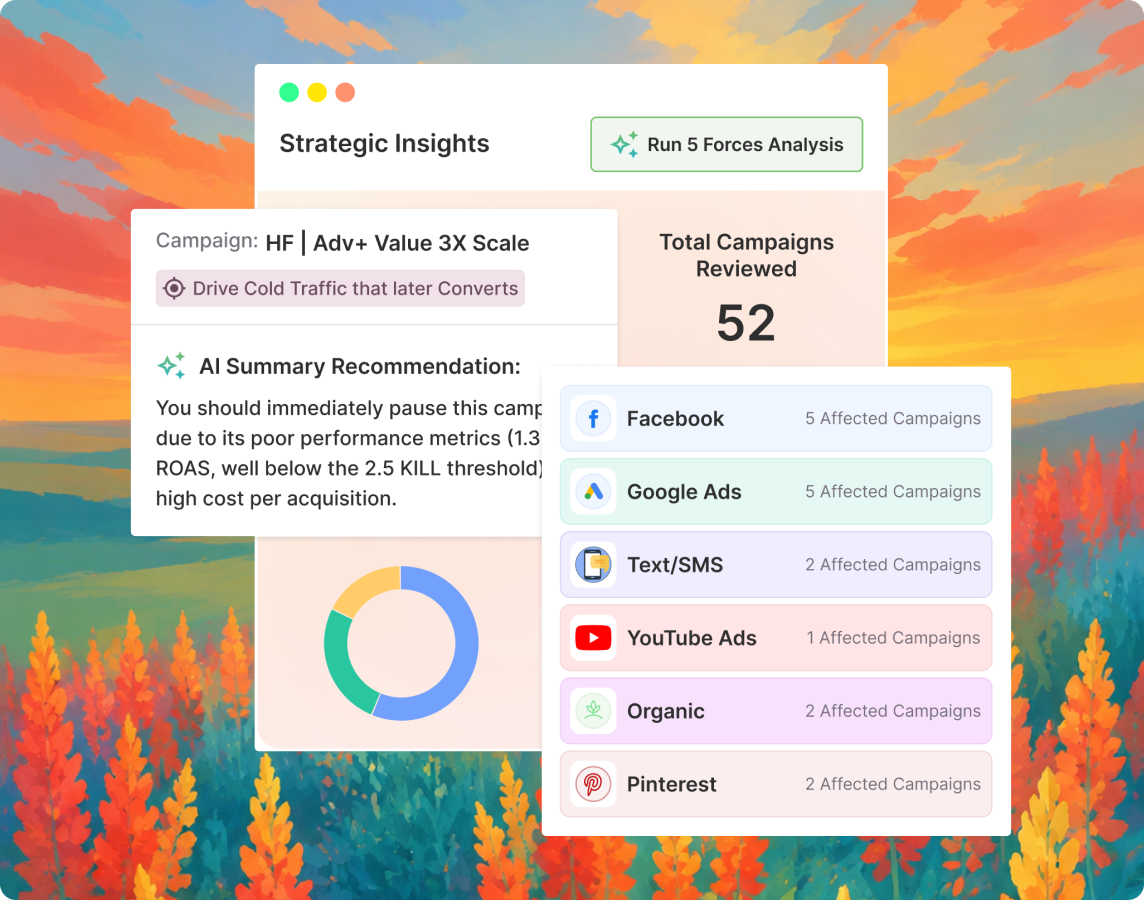
Predictable outcomes by campaign type
Correct lookback windows prevent false negatives
Zones eliminate indecision
Protects prospecting + NCA from BOF bias
Makes weekly decisions faster and defensible
