-Aug-11-2026-08-14-40-4464-AM.png)
BOOST YOUR SALES WITH ECOMMERCE MARKETING ANALYTICS: MEASURE THE RIGHT METRIC FOR EACH CAMPAIGN
Running an ecommerce business means juggling products, site, and campaigns, and eventually every decision comes down to the data. But most ecommerce marketing analytics lead you astray in two specific ways: they judge every campaign by the same metric, and they trust each platform's self-reported numbers. Fix both, and your analytics start telling you the truth. Here is how to choose the right metric for each campaign and measure it against real revenue.
MATCH THE METRIC TO THE CAMPAIGN'S JOB
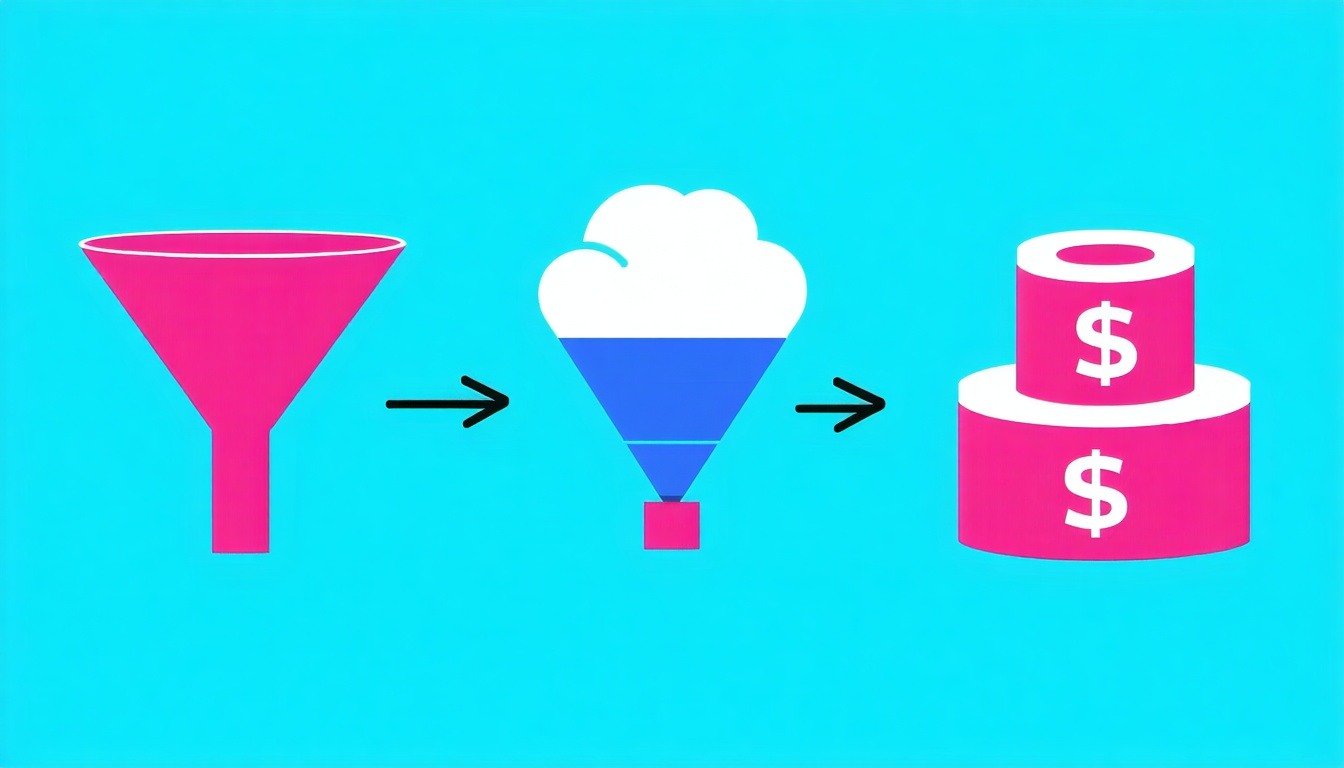
Think of each campaign like a hire for a specific role. You would not judge a salesperson and a receptionist by the same scorecard, and you should not judge a top-of-funnel prospecting campaign and a bottom-of-funnel closing campaign by the same metric either. Each campaign has a different job, so each needs a different measure of success.
This is where most reporting goes wrong. A prospecting campaign whose job is to find new customers gets judged on immediate ROAS and looks like a failure, so it gets cut, even though it was doing exactly what it was hired to do: introduce new people who buy later. Judge the campaign against its actual job, and you make far better decisions.
Here is how the metric should change with the campaign's purpose.
| Marketing Objective | Relevant Metrics | How to Measure |
| Find New Customers | New Visits, New Visit Percentage | Track how many clicks come from genuinely new visitors and what share of traffic they represent |
| Engage Leads | Pages per Visit, Returning Visitors, Email Engagement | Look at depth of engagement and whether leads come back |
| Close Sales | Conversion Rate, Average Order Value, Cart Abandonment | Track the share of visits that convert and the value of those orders |
The single most useful metric here is New Visit Percentage, the share of a campaign's clicks that come from truly new potential customers. It tells you whether a prospecting campaign is actually reaching new people or just recirculating your existing audience, which is the difference between growth and expensive stagnation.
WHY PLATFORM ANALYTICS ALONE MISLEAD YOU
Choosing the right metric only helps if the numbers behind it are trustworthy, and platform-reported numbers usually are not. Say your team runs Meta ads and Google ads. Both dashboards say things are great, ROAS is up year over year. But each platform only sees its own slice of the journey and has every incentive to claim credit, so both can report success for the same sale, and neither can tell you whether a new customer or a repeat buyer drove it.
Top-of-funnel work suffers the most from this. The channels that first introduce a customer rarely get the last click, so last-click reporting makes them look worthless and pushes you to cut the very campaigns that feed your funnel. Accurate ecommerce analytics have to account for those early touches, not just the final one.
MEASURE AGAINST REAL REVENUE, NOT PLATFORM CLAIMS
The fix is to reconcile every channel against your actual sales rather than trusting any platform's self-report. That means people-based, multi-touch measurement: following a real customer across devices and channels, crediting the full path from first touch to purchase, and tying it back to a real order in your store.
This is what Wicked Reports does. It connects your ad platforms, CRM, and real orders into one people-based view, so you see which campaigns genuinely find new customers, which ones close, and what each is truly worth, measured against revenue that actually landed. It also reports the new-customer metrics that platform dashboards hide, like nCAC and New Visit Percentage, so you can judge each campaign against its real job. When platforms change their reporting rules without warning, which they do often, your view of the truth does not move, because it is anchored to your own sales data.
AUTOMATE THE DECISION, ONCE THE DATA IS TRUSTWORTHY
When your metrics are matched to each campaign's job and measured against real revenue, you can set decision rules ahead of time instead of reacting to daily noise. Decide in advance what a winner looks like, for example a prospecting campaign holding nCAC below your target across a full buying cycle, and act on that rule consistently rather than on emotion. The value of automation is not just time saved. It is that every campaign gets judged by the same trustworthy standard, so the whole team acts on one version of the truth.
THE TAKEAWAY
Better ecommerce marketing analytics come down to two disciplines. Match the metric to each campaign's job, so a prospecting campaign is judged on new customers and a closing campaign on conversion. And measure those metrics against your real revenue, not each platform's flattering self-report. Do both, and your analytics stop being a source of confusion and become a reliable guide to where your next dollar should go. See how it works in the platform overview, or book a demo to see your real numbers.
FAQ
WHAT METRICS SHOULD I USE FOR DIFFERENT ECOMMERCE CAMPAIGNS?
Match the metric to the campaign's job. Judge new customer prospecting campaigns on new visits and New Visit Percentage, judge lead-engagement campaigns on depth of engagement and returning visitors, and judge closing campaigns on conversion rate, average order value, and cart abandonment. Using one blanket metric like ROAS for every campaign leads you to misjudge and cut campaigns that were doing their actual job.
WHY DON'T PLATFORM ANALYTICS GIVE ME ACCURATE NUMBERS?
Because each platform only sees its own slice of the customer journey and has an incentive to claim credit, so Meta and Google can both report the same sale, and neither reconciles against your real orders or distinguishes new from repeat customers. Accurate ecommerce analytics require reconciling every channel against your actual revenue with people-based, multi-touch measurement.
WHAT IS NEW VISIT PERCENTAGE AND WHY DOES IT MATTER?
New Visit Percentage is the share of a campaign's clicks that come from genuinely new potential customers rather than people already familiar with your brand. It matters because it tells you whether a prospecting campaign is truly reaching new people or just recirculating your existing audience, which is the difference between real growth and paying to reach the customers you already had.
HOW DOES AUTOMATION HELP WITH MARKETING DECISIONS?
Once your metrics are matched to each campaign's job and measured against real revenue, you can set decision rules in advance, such as scaling a campaign that holds nCAC below target across a full buying cycle. This keeps decisions consistent and objective, so every campaign is judged by the same trustworthy standard instead of reacting to daily fluctuations.

-Aug-11-2026-07-54-24-6731-AM.png)