Free playbook
Your platforms are grading their own homework
Six challenges. The hidden dollar cost of each. And the system that fixes the measurement, trains Meta on your actual goals, and makes every budget decision provably worth it.

−40%
nCAC · Joanna Vargas
−63%
nCAC · CBazaar
+127%
New customers · CBazaar
3×
Guarantee or free in 90 days
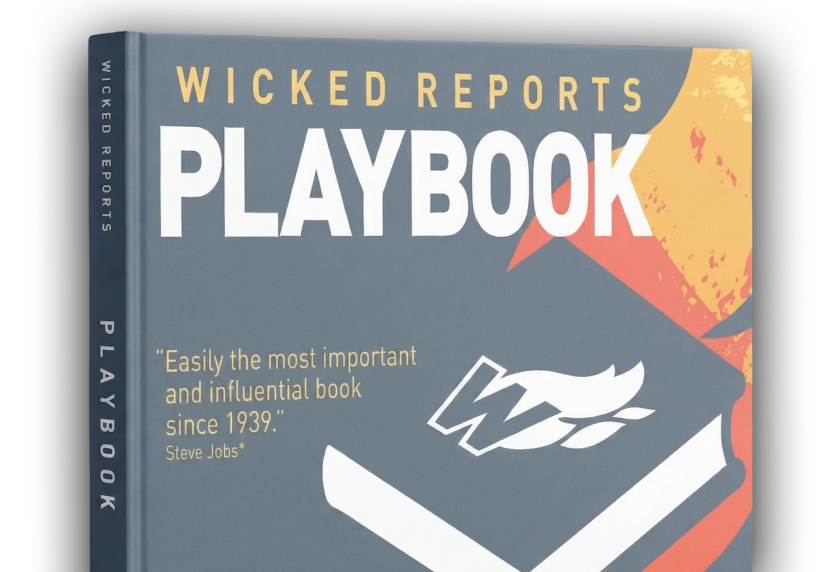
{ Built for three buyers }
Which one sounds like your week?
The week that sent you here

Meta ROAS looks fine. Revenue is growing. But you're not signing as many new customers as you expected and you can't explain why.
Your CFO or finance partner is asking you to justify paid spend with metrics that aren't platform ROAS. You don't have a clean answer.
You've scaled a campaign that looked great at week 2 and then watched new customer volume plateau at month 3. Something changed but you couldn't see it in the data.
You've considered Triple Whale or Northbeam but aren't sure whether they solve the actual problem or just give you a prettier version of the same incomplete picture.
What the playbook gives you

How to calculate your real nCAC across all channels — the number your CFO can actually evaluate
Why Meta's algorithm drifts toward retargeting even when you think you're running prospecting — and the one signal change that fixes it
The weekly 20-minute review that tells you which campaigns to scale, which to hold, and which to kill — with dollar proof on every decision
Why we can guarantee 3× subscription cost in 90 days — and why Triple Whale and Northbeam can't offer the same
{ Inside the playbook }
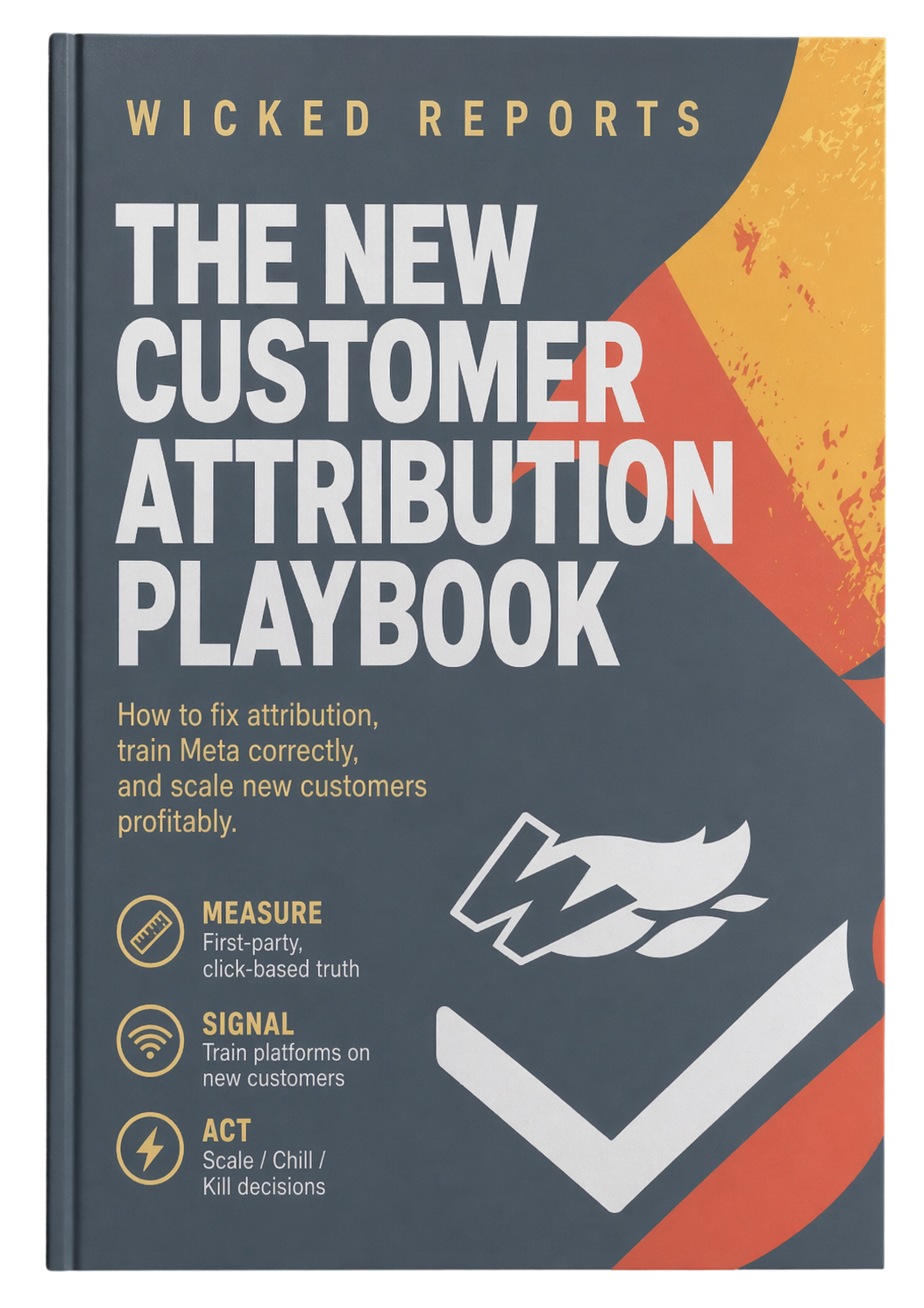
29 pages. Everything you need to fix the measurement layer.
What's inside
Six challenges, the dollar cost of each, and practical solution paths at every level — GA4, DIY, and full operating system.
01 - Your ROAS looks great. You don't know how many new customers you got.
02 - Meta's AI is spending prospecting budget on customers you already have.
03 - You're killing winners at day 14 — but they buy on day 45.
04 - You're paying for ads nobody clicked — and calling it proof.
05 - The ad that introduced your customer 45 days ago gets zero credit.
06 - Your team argues about dashboards instead of making decisions.
Quick start:
Your first 7 days · Weekly operating rhythm · Case studies · Signal architecture deep-dive · Glossary
Your first 7 days · Weekly operating rhythm · Case studies · Signal architecture deep-dive · Glossary
{ Proof, not promises }
Real brands. Real numbers. Same system.

"We dropped our customer acquisition cost by 40%… firing customers at 116 on average, and we've dropped it down to 69."
−40%
nCAC in 30 days
$116→$69
Acquisition cost
1 change
The signal sent to Meta

"Same system. Different starting point. We cut new customer acquisition cost by 63% while growing new customer volume by 127% at the same time."
−63%
nCAC reduction
+127%
New customers
Same time
Lower cost + more customers simultaneously
{ Download free }
The New Customer
Attribution Playbook
Attribution Playbook
Get instant access. 20 minutes. Six challenges with dollar costs calculated and clear solution paths for each.

Why nCAC is the only metric that matters — and how to calculate it across all channels
The signal change that dropped nCAC 40% in 30 days
How Meta's algorithm is quietly spending your prospecting budget on existing customers
The weekly decision rhythm that eliminates guesswork
{ The Wicked 3× Guarantee }
We guarantee 3× your subscription
cost in 90 days — or free until you do.
cost in 90 days — or free until you do.
The playbook explains the problem. Wicked solves it — with a guarantee no other attribution tool offers. Every decision logged with verified dollar math. The counter builds automatically.
$500–$1K/mo
subscription cost
$1.5K–$3K
guaranteed in 90 days
~4 weeks
typical time to hit threshold
Free
if you don't hit it — automatic