


You Know the Dashboard Is Lying

You're a skilled media buyer. You've seen campaigns that Meta loves and clients hate. You've defended ROAS numbers you didn't fully believe. You've felt the disconnect between platform performance and actual business results.
That disconnect isn't a skill problem. It's a data problem. And Wicked Reports is built to fix it.



The Problem With Working From Platform Data

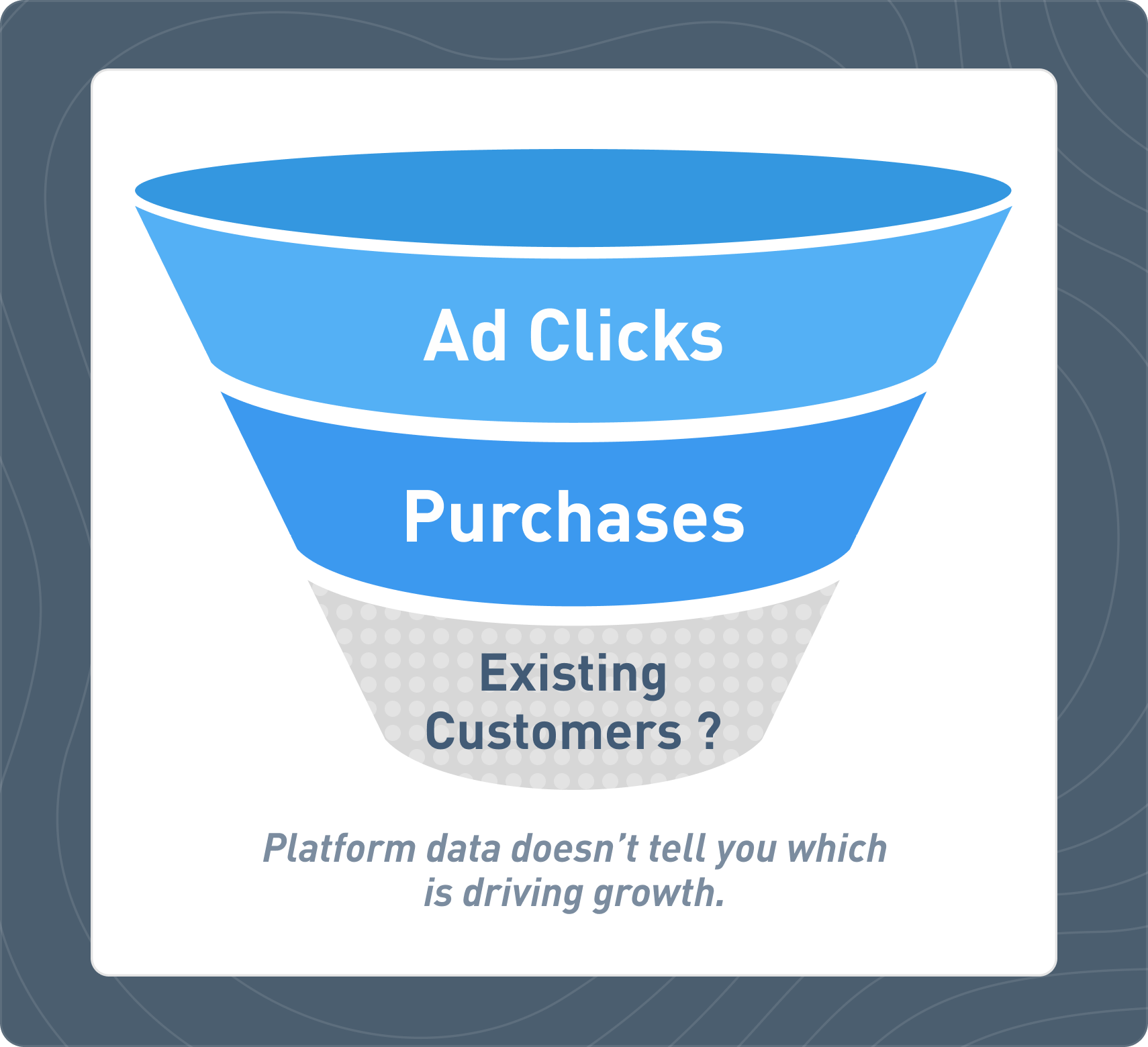
Meta optimizes for the outcomes you reward it for. If you're rewarding 'purchases,' it finds the easiest purchases — which are usually people who were already going to buy. The algorithm isn't broken. It's doing exactly what it's designed to do. But that incentive means your prospecting budget slowly gets cannibalized by retargeting, and your reported ROAS holds steady even as new customer acquisition stalls.
You suspect it's happening. But you can't prove it — or disprove it — without first-party data that separates new customers from repeat buyers at the campaign level.
That's what Wicked Reports gives you.
What Changes When You Have Clean Data

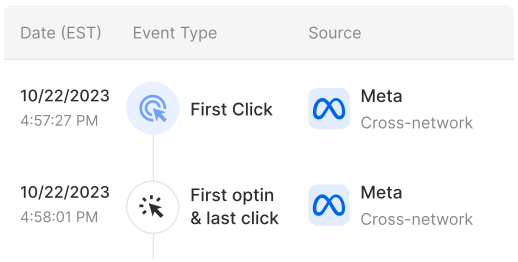
You can finally defend TOF spend with actual numbers
Top-of-funnel campaigns are notoriously hard to justify because GA4 and Meta's native reporting credit the last click — which is almost always a retargeting ad or direct visit. Wicked's Attribution Time Machine stitches the full customer journey back together, proving which TOF clicks created the customers who later converted through email, branded search, or direct traffic.
When a client says 'cold traffic isn't working,' you'll have order IDs and click timestamps to show them exactly which customers that cold traffic created.
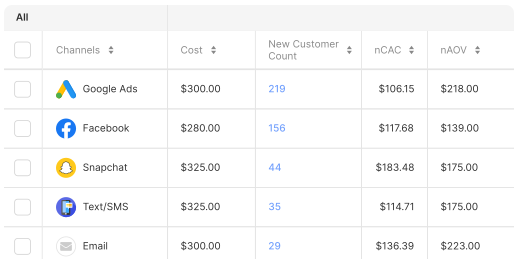
New vs. repeat segmentation — the view that changes everything
Wicked shows you new customer acquisition cost (nCAC) separately from blended CAC — at the campaign, ad set, and creative level. You'll immediately see which campaigns are building the client's business and which are just cycling through existing buyers at a markup.
This is the view that exposes the retargeting trap. Once you see it, you can't unsee it — and you can fix it.
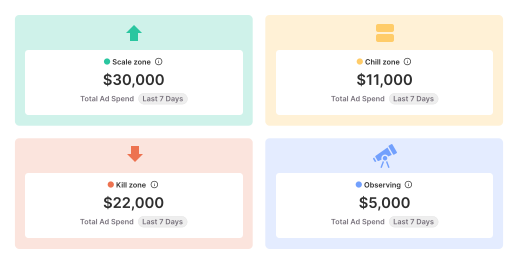
Scale / Chill / Kill — replace guesswork with a weekly verdict
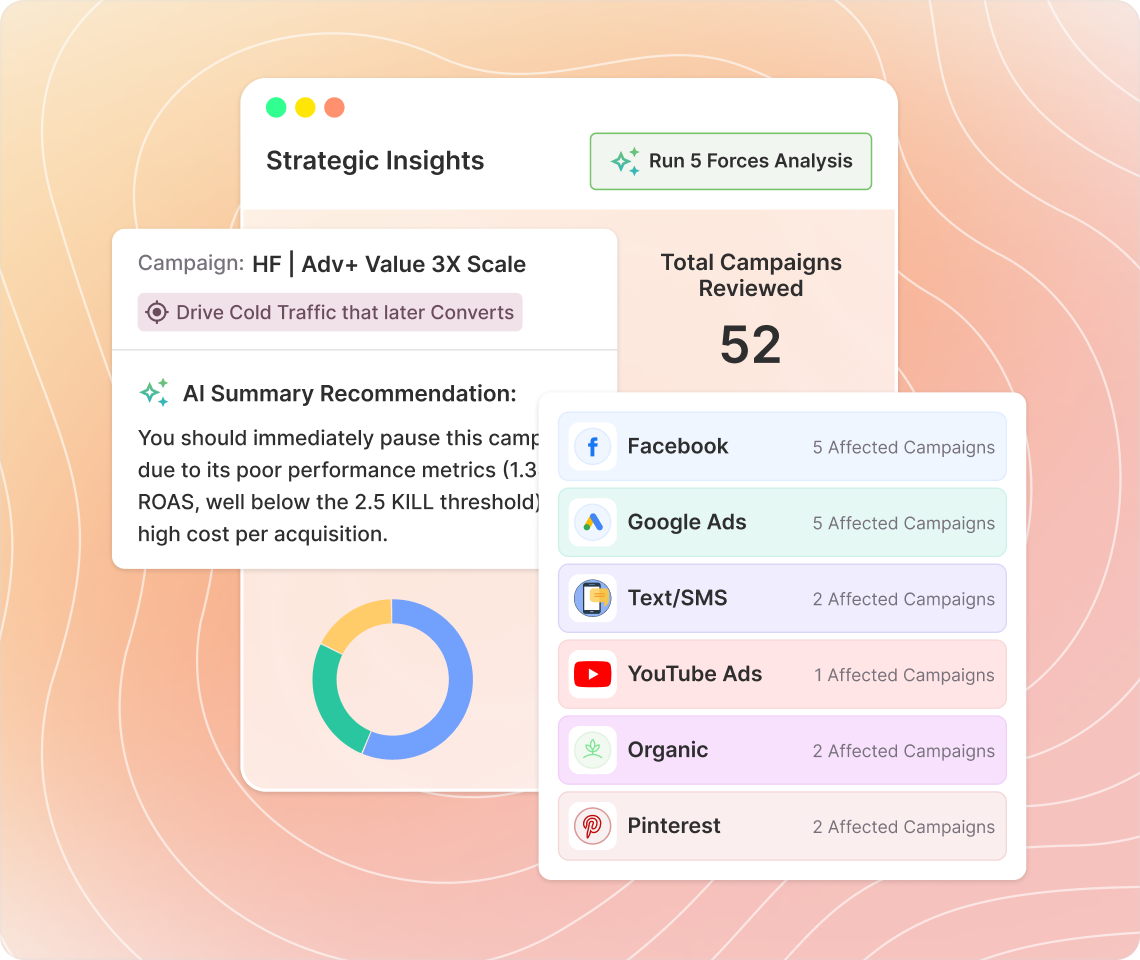
Every campaign gets evaluated against pre-set zones tied to the correct intention and attribution window. Below nCAC target? Scale. Within range? Chill. Above threshold? Kill or restructure.
This gives you a defensible framework for every budget recommendation. You're not pushing your opinion — you're running a process. That's a different conversation with clients.
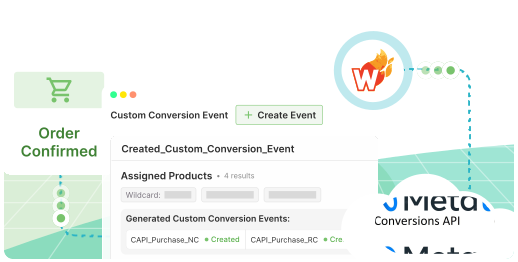
Advanced Signal — correct Meta's optimization at the signal level
Instead of arguing with Meta's algorithm, Advanced Signal changes what it learns from. You send segmented new-customer purchase events through the Conversion API — so Meta's optimization starts moving toward new buyers instead of retargeted converters.
This is the lever that drove Joanna Vargas from $116 nCAC to $69 nCAC in a single month. Not audience hacks. Signal architecture.
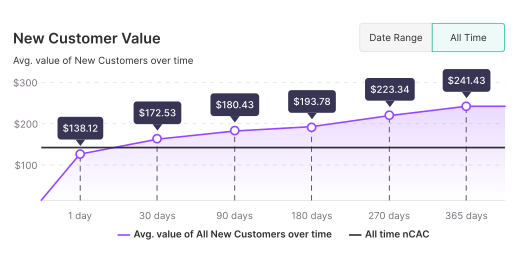
FunnelVision — multi-touch attribution across the full journey
First-click, full-impact, linear — all visible simultaneously. For channels like Pinterest that require longer evaluation windows, FunnelVision reveals value that 7-day last-click reporting completely misses. One agency was about to abandon Pinterest entirely. Wicked showed it was generating $131K in 30-day revenue and $231K at 120 days. They doubled spend instead.
What Agency Partners Also Get

The 5 Forces methodology gives your entire team a shared decision language. Every campaign is evaluated by Intention (prospecting / retargeting / LTV expansion), assigned the correct attribution window, and scored weekly. New media buyers ramp faster. Senior buyers stop re-explaining the same frameworks to clients.

Proven Results






The Job Is Not to Report. It's to Make the Right Call.

Wicked Reports gives you the data quality and decision framework to know — with confidence — whether to Scale, Chill, or Kill each campaign this week.
That's what separates a media buyer who defends the platform from one who owns the outcome.
